Nigeria’s $1 Trillion Economy Dream Hinges on Urgent Port Overhaul, Maritime Stakeholders Warn
Nigeria’s $1 Trillion Economy Dream Hinges on Urgent Port Overhaul, Maritime Stakeholders Warn
By Jerry Aguigbo
Nigeria will miss its ambitious $1 trillion economy target by 2030 unless the Federal Government urgently overhauls its seaports, cuts cargo delays, and enforces existing maritime laws.
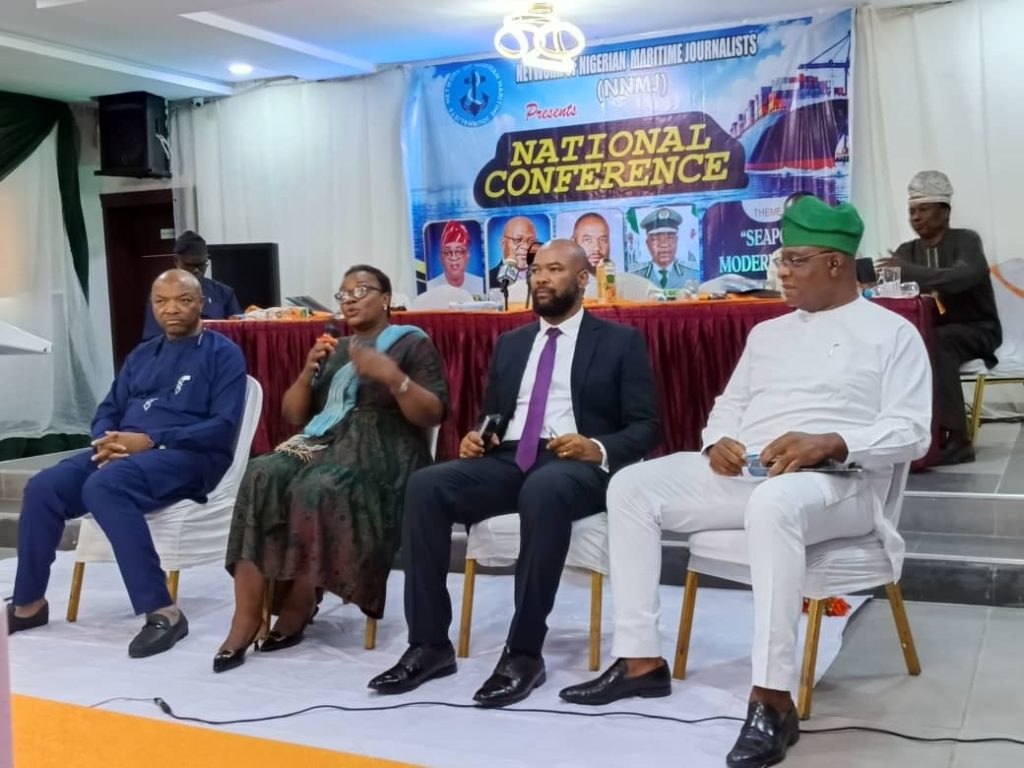
This was the central warning issued at the 2026 National Conference of the Network of Nigeria Maritime Journalists (NNMJ) held on Friday, November 13, 2026, in Ikeja, Lagos. Under the theme “Seaport Modernisation, Trade Facilitation and Revenue,” industry leaders, regulators, and legal experts dissected the bottlenecks choking the nation’s blue economy.
Delivering the keynote address, maritime legal expert Dr. Emeka Akabogu, SAN, cited data from the Nigerian Ports Authority (NPA), UNCTAD, and the World Bank to show that Nigeria’s current port capacity cannot support a $1 trillion economy. Stakeholders highlighted several critical failures:
According to them, roughly 90% of port cargo is still moved by road, leaving terminals like Apapa and Lekki congested due to a lack of functional rail and inland waterway links.
Another lacuna is that Shipping lines continue to collect container deposits despite a clear ban under the Nigeria Insurance Industry Reform Act, 2025.
They criticized delayed Digitalisation and Slow agency onboarding which continues to stall the National Single Window project, keeping clearance procedures slow and prone to revenue leakages.
Data Blindness is another critical issue mitigating against port development. Agencies like NIMASA and the NPA they lamented, lack reliable, accessible data on vessel calls, cargo throughput, and local fleet capacity, crippling effective planning.
Chaired by former NIMASA Director-General Barrister Temisan Omatseye, the conference resolved that revenue generation must not suffocate legitimate trade. Stakeholders issued a strict set of targets for the Federal Government and the Ministry of Marine and Blue Economy:
To Slash Turnaround Times, cut cargo dwell time to a maximum of seven days immediately (and four days long-term), while dropping vessel turnaround time to 3.3 days.
Expand rail and waterway integration so rail handles 25% to 30% of all port cargo evacuation.
They urged the government to empower the Nigerian Ports Economic Regulatory Agency (NPERA) and regulators to stop illegal container deposits and enforce commercial compliance.
To Activate the Single Window, strict, measurable deadlines to integrate Customs, NPA, NAFDAC, SON, and NIMASA onto a single electronic clearance platform must be set.
They implored that to boost Local Capacity, government must Provide targeted financing to grow Nigeria’s indigenous shipping fleet and capture freight revenue currently lost to foreign vessels.
Both Barrister Omatseye and Lagos NUJ Chairman Comrade Adewale Akodu challenged maritime journalists to move beyond routine press releases. They urged reporters to embrace data-driven, investigative journalism and partner with transport and solid minerals reporters to hold agencies accountable.
“Solutions to Nigeria’s port challenges can be developed locally,” noted Dr. Bolaji Sunmola, Chairman of the Nigeria Port Consultative Council (NPCC), assuring stakeholders of the council’s readiness to collaborate.
The conference concluded with a unified demand: government and private operators must move past policy announcements and deliver measurable port reforms.
About Post Author